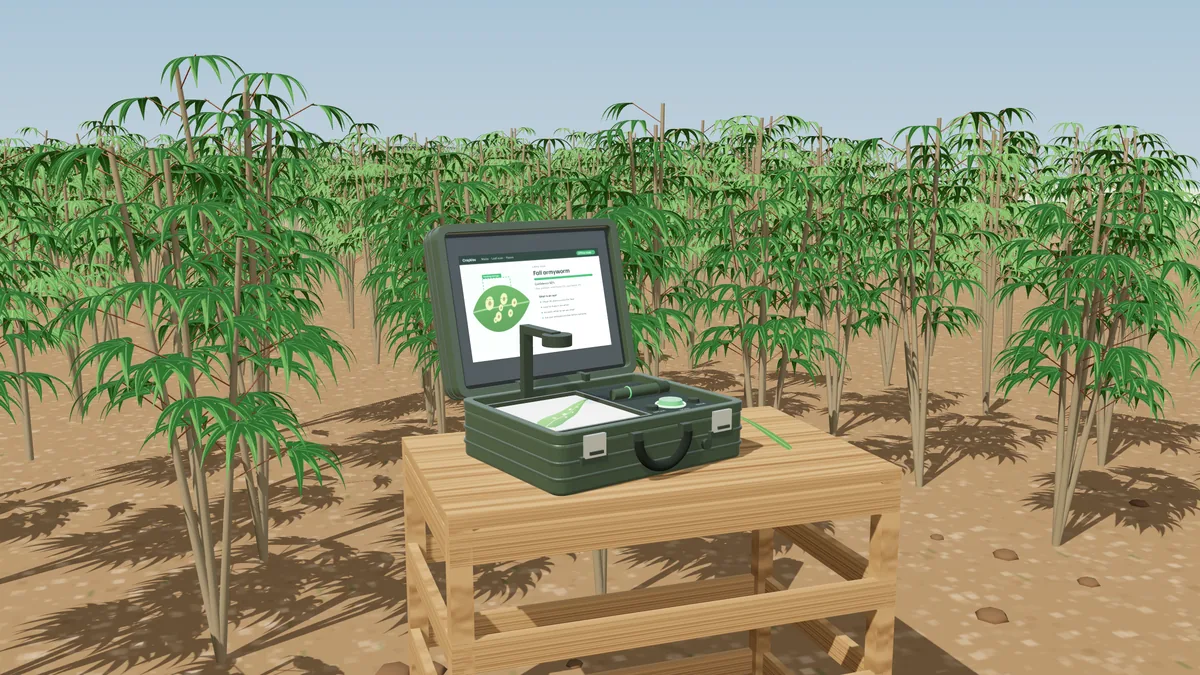
 CropVox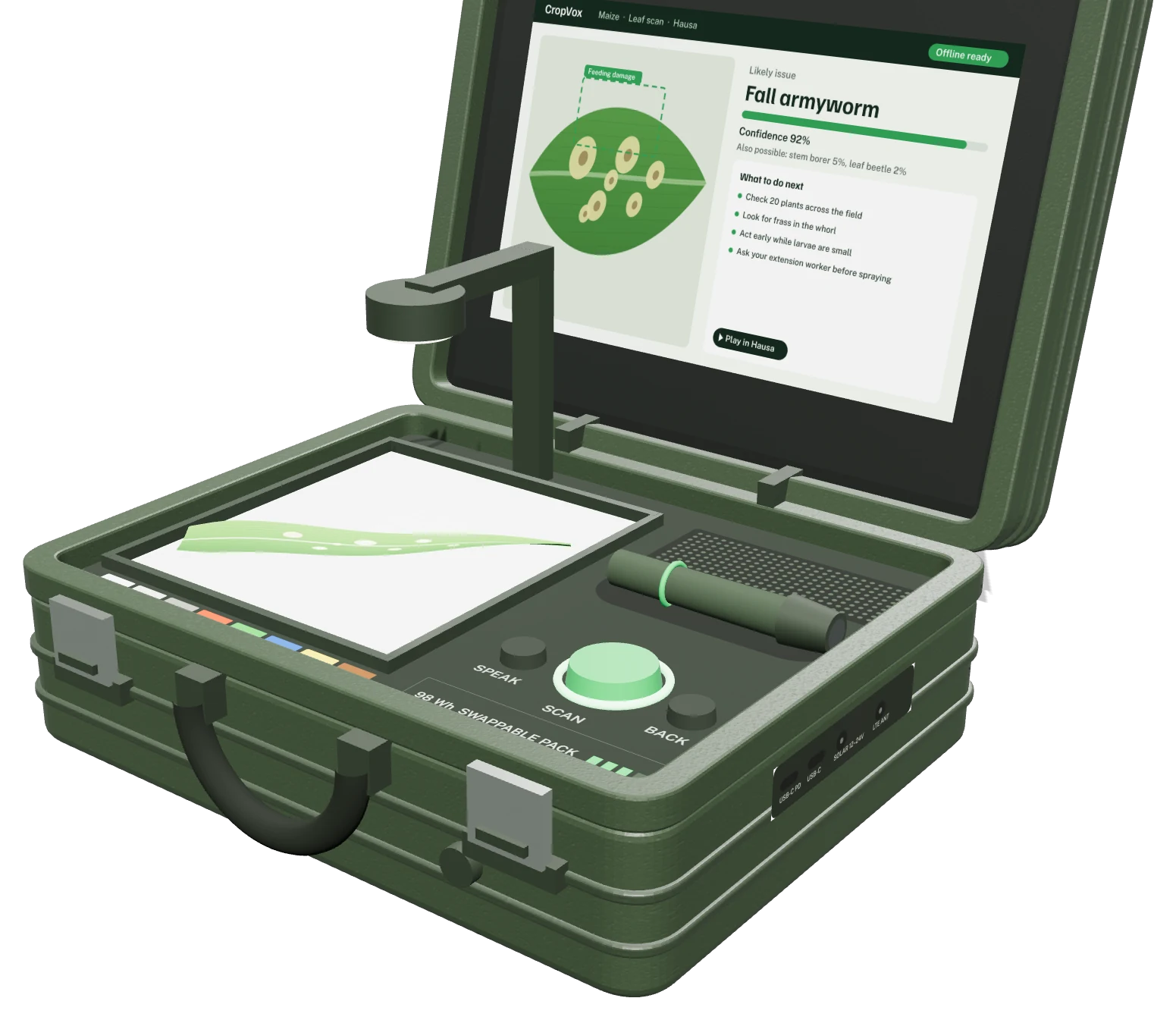
A structured pipeline, not one big guess
Splitting diagnosis into stages makes each one easier to train, test and explain. It also means the station can stop early when an image is not good enough.
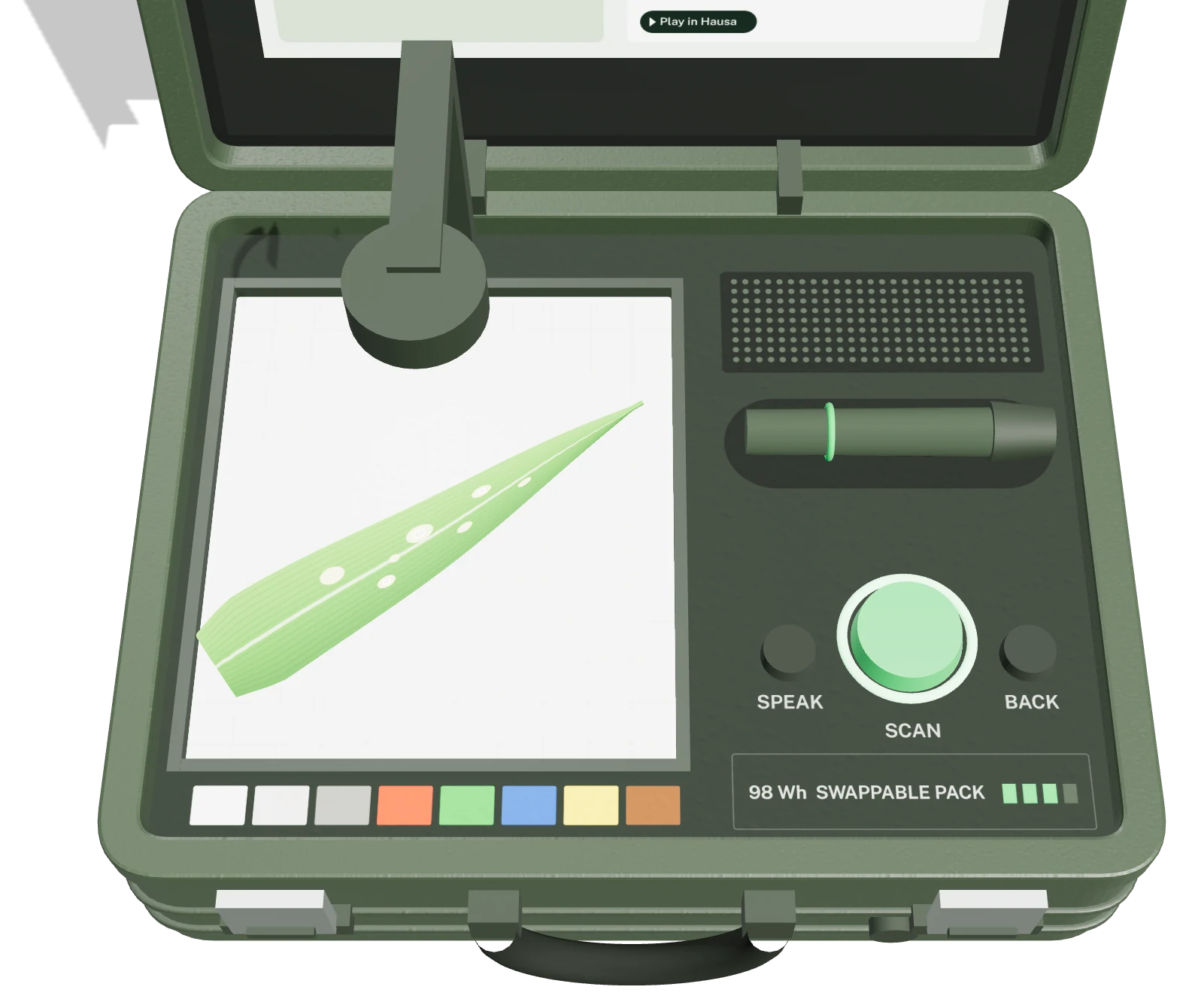
Image check
Blur, exposure and framing
Sharp, well litCrop
Which of the ten crops
MaizePlant part
Leaf, stem, pod or whole plant
LeafCondition
Ranked likely problems
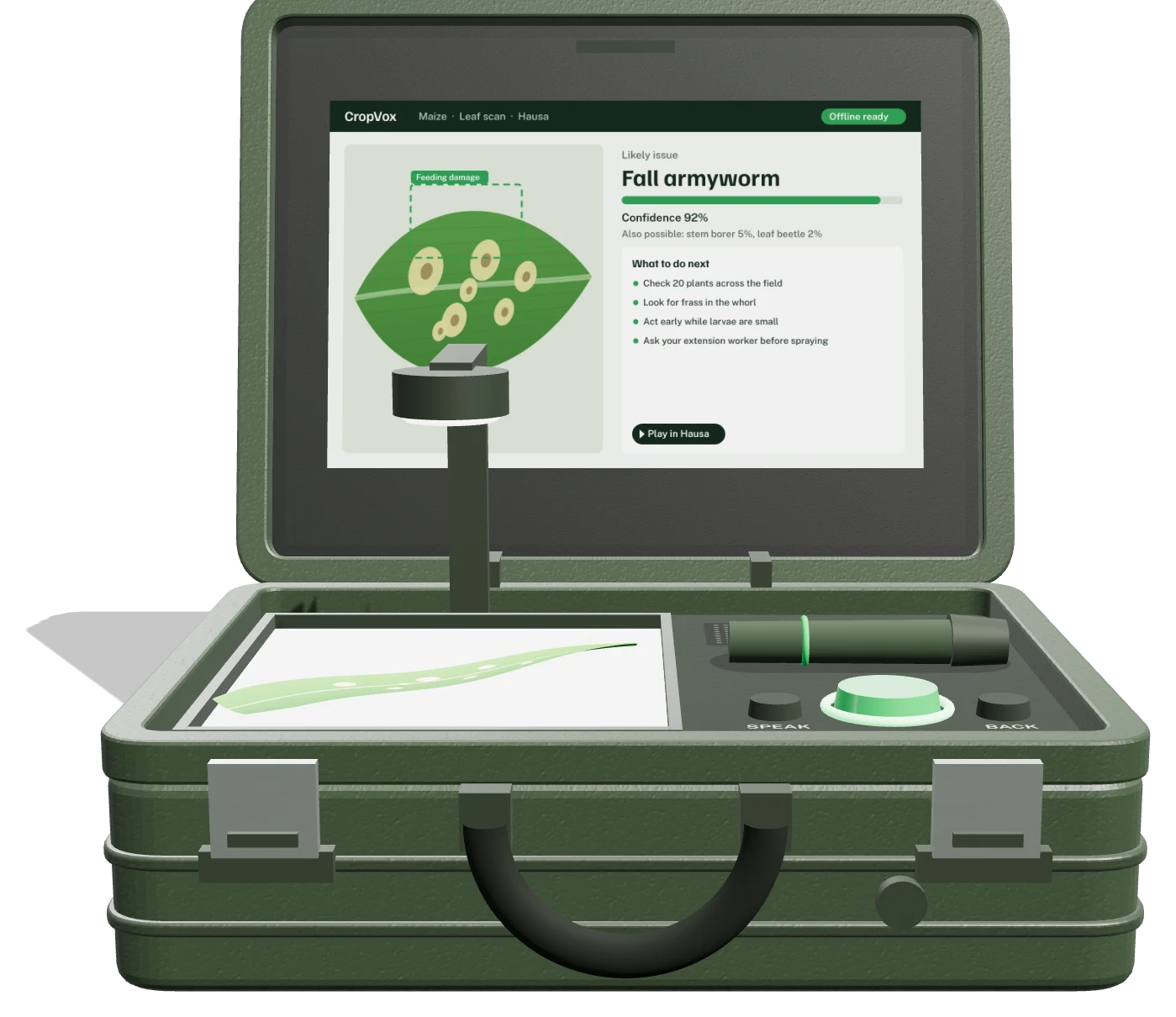
Fall armyworm 92%Guidance
Curated next steps, spoken
Hausa audioTrained on GPUs, run on the station
Models are trained centrally, then compressed to run fast on the embedded module with no connection.
Collect field images
Images are captured with the station itself, so training data looks like what the model will see in use. Agronomists label each one.
Fine-tune on NVIDIA GPUs
Pretrained vision backbones are fine-tuned per crop, with balanced classes and augmentation for light, dust and leaf age.
Optimise for the edge
Models are quantised and compiled with TensorRT for the Jetson Orin class module in the case.
Validate by region
Each release is tested on held-out images from the region where it will be used, with results published per condition.
Ship as an update
Stations download the release when connected and keep the previous version as a fallback.
Knowing when not to answer
Confidence is treated as part of the result. Low confidence changes what the station does next.
Image quality first
Blur, darkness and poor framing are caught before diagnosis, with a plain prompt to rescan.
Ranked alternatives
The top three options are always shown, with what to check in the field to tell them apart.
Escalation later
Unclear cases are queued and sent to an expert reviewer the next time the station connects.
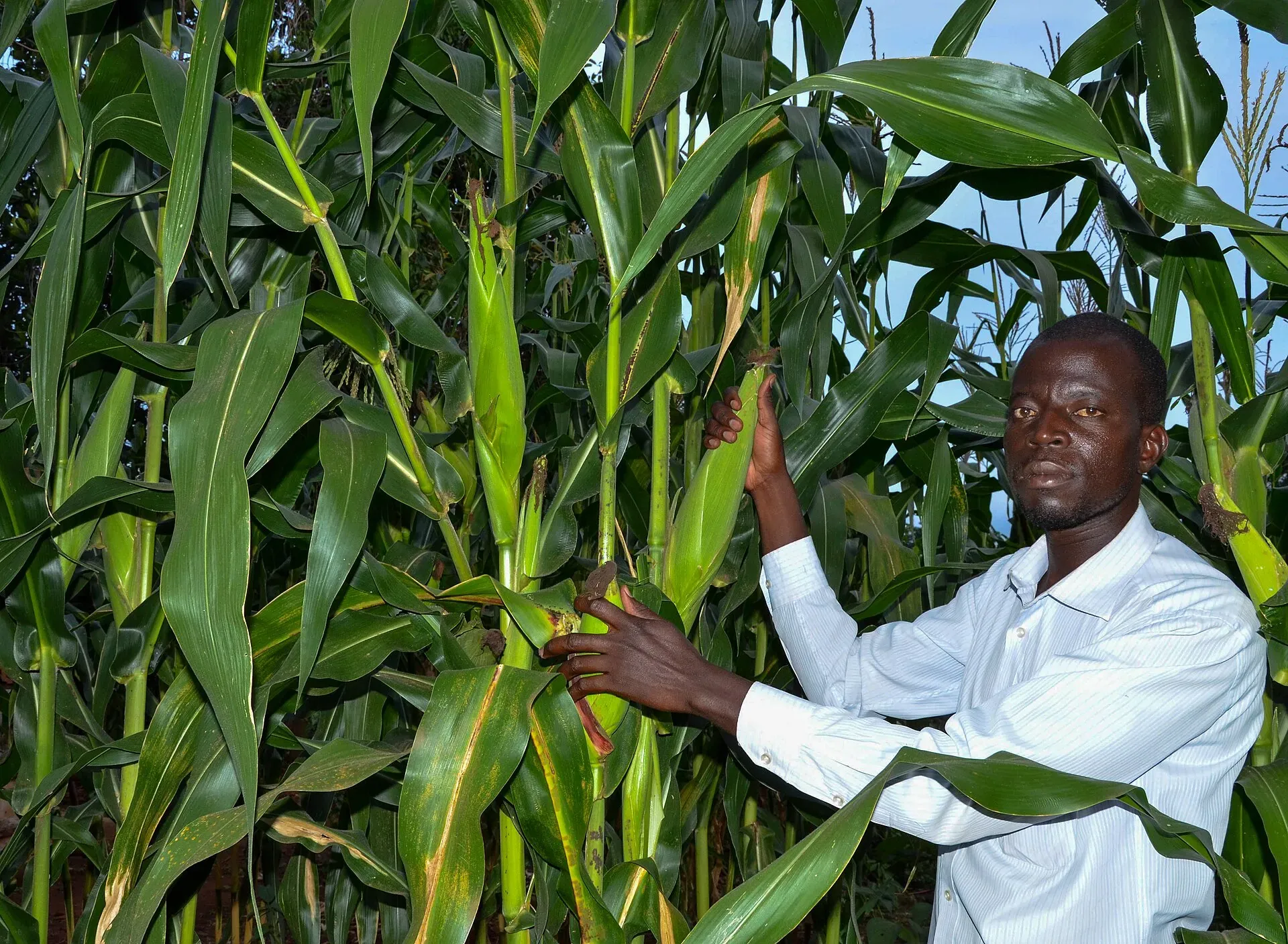 Photo: Emmanuel Ssekaggo, CC BY-SA 4.0
Guidance is curated, never generated
The model decides what the problem probably is. What the farmer hears comes from a reviewed library written with local agronomists, so treatment advice stays appropriate and legal for each country.