 CropVox
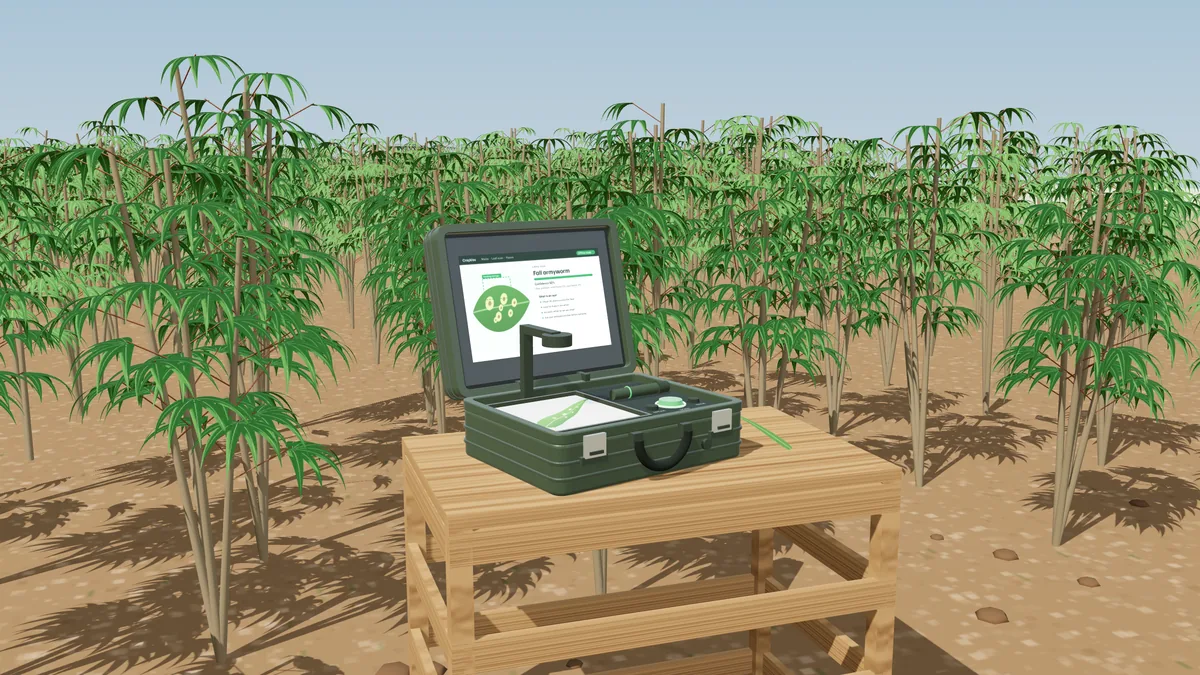
Crop answers where the farm is.Even offline.
Bring a leaf to the CropVox field station. It recognises likely disease, pest damage, nutrient problems and crop stress on the spot, then talks the farmer through what to do next in their own language.
- 10 crops at launch
- Diagnosis runs without signal
- Spoken guidance in five languages
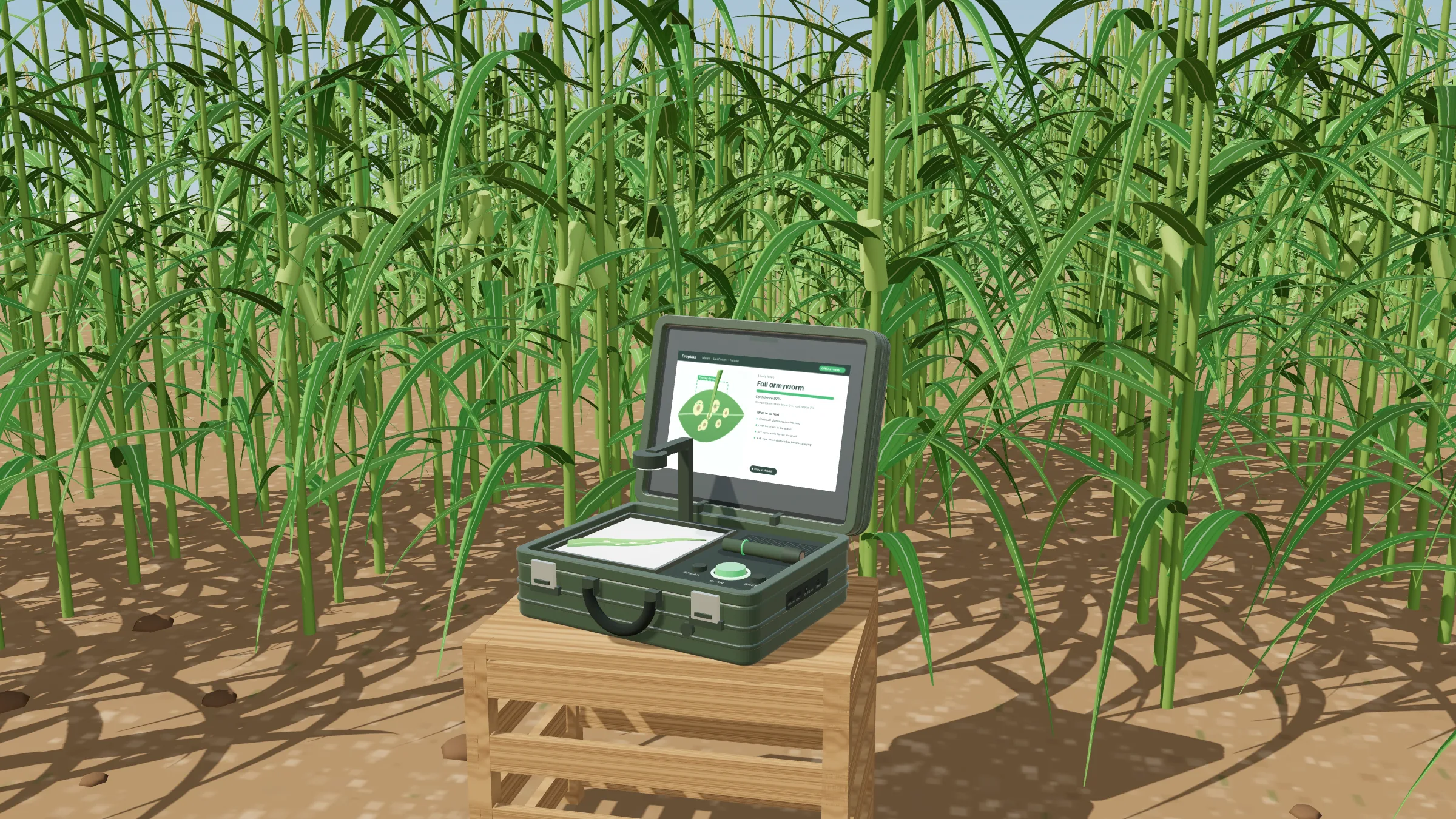
The core scan runs on the station itself.
- Diagnosis
- Spoken guidance
- Scan history
- Sync when connected
Built for the people who walk the rows
Farmers notice the problem first. Extension workers and cooperatives are usually the next people they ask. CropVox is designed to sit between them.
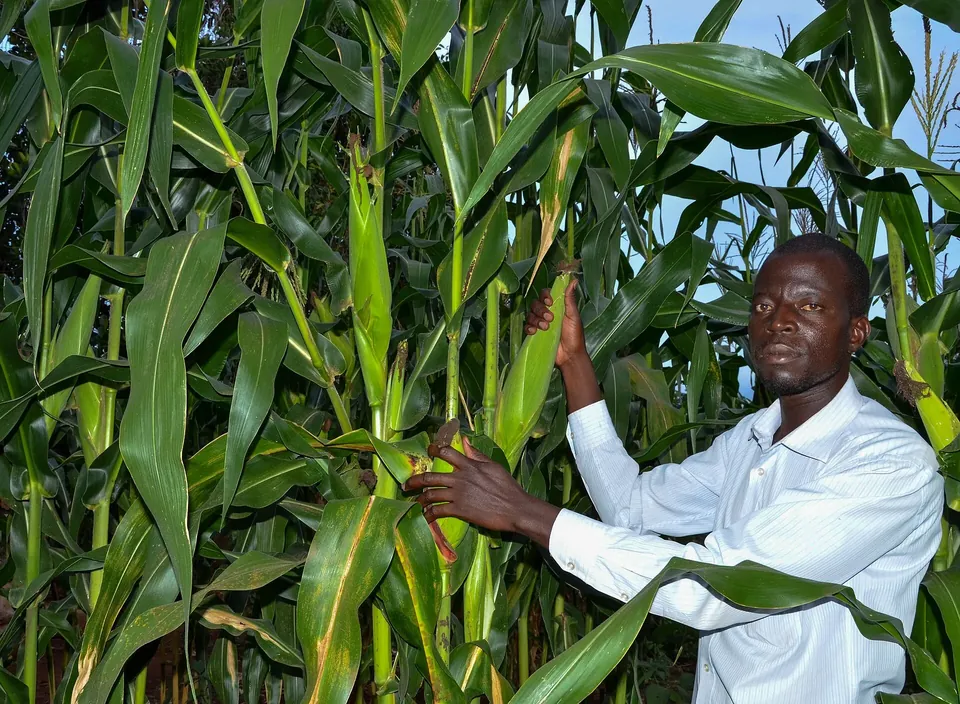
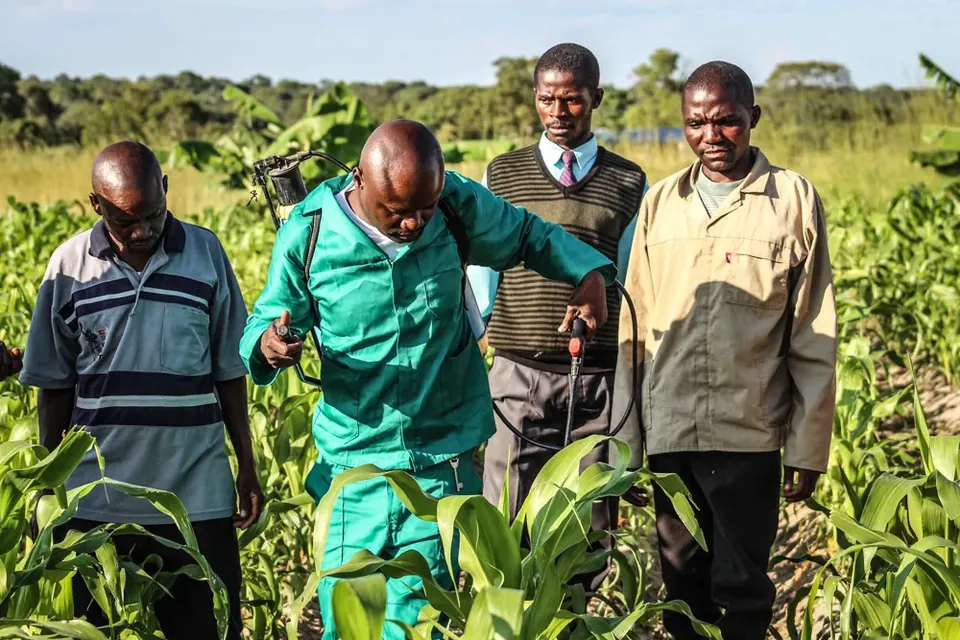
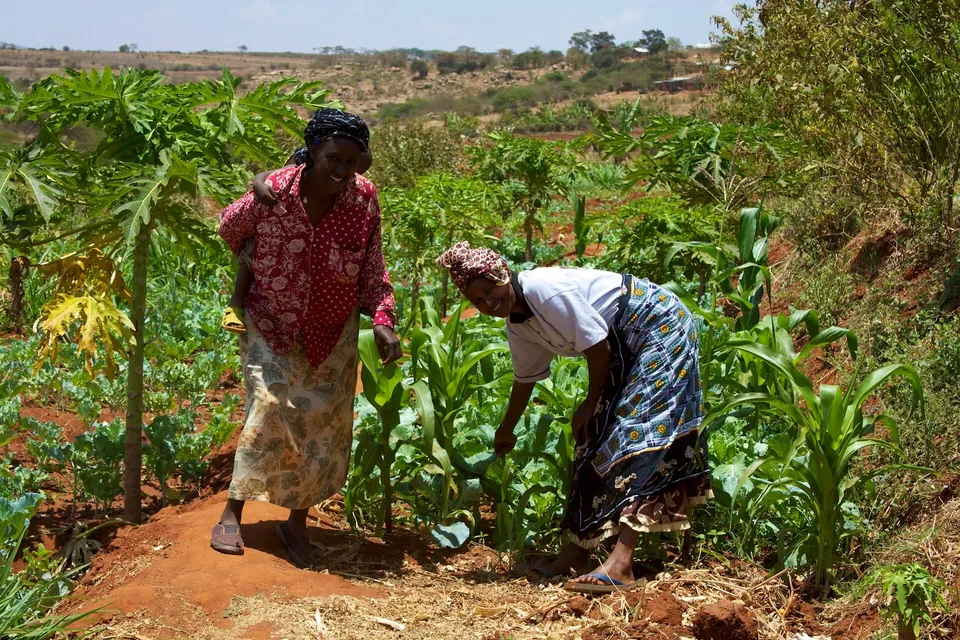
Photos: Emmanuel Ssekaggo, Tigana Chileshe and McKay Savage via Wikimedia Commons. Credits
A complete crop clinic that closes like a briefcase
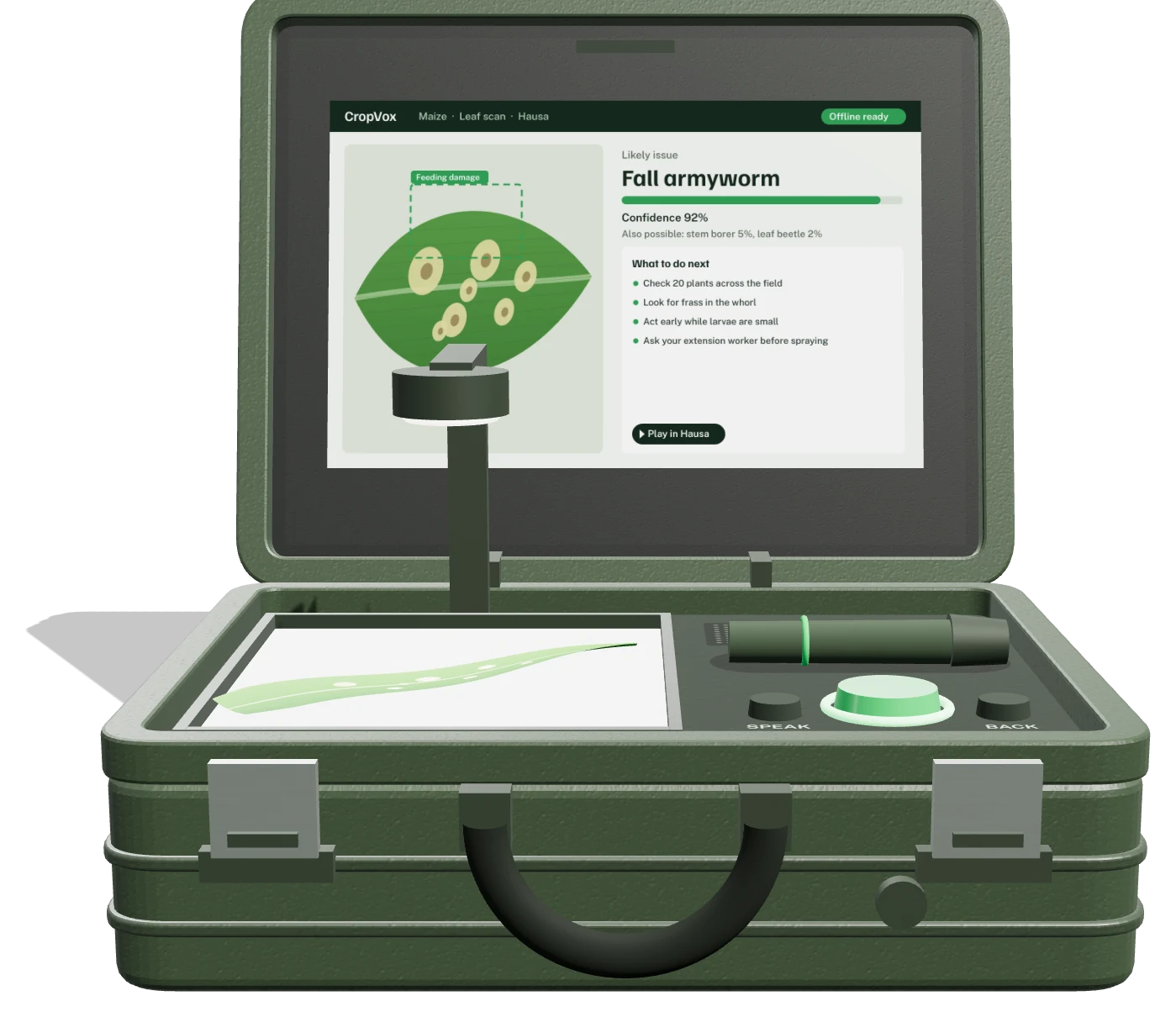
Everything a scan needs travels in one sealed case: two cameras, controlled lighting, a screen, a speaker, embedded AI compute and a day of battery.
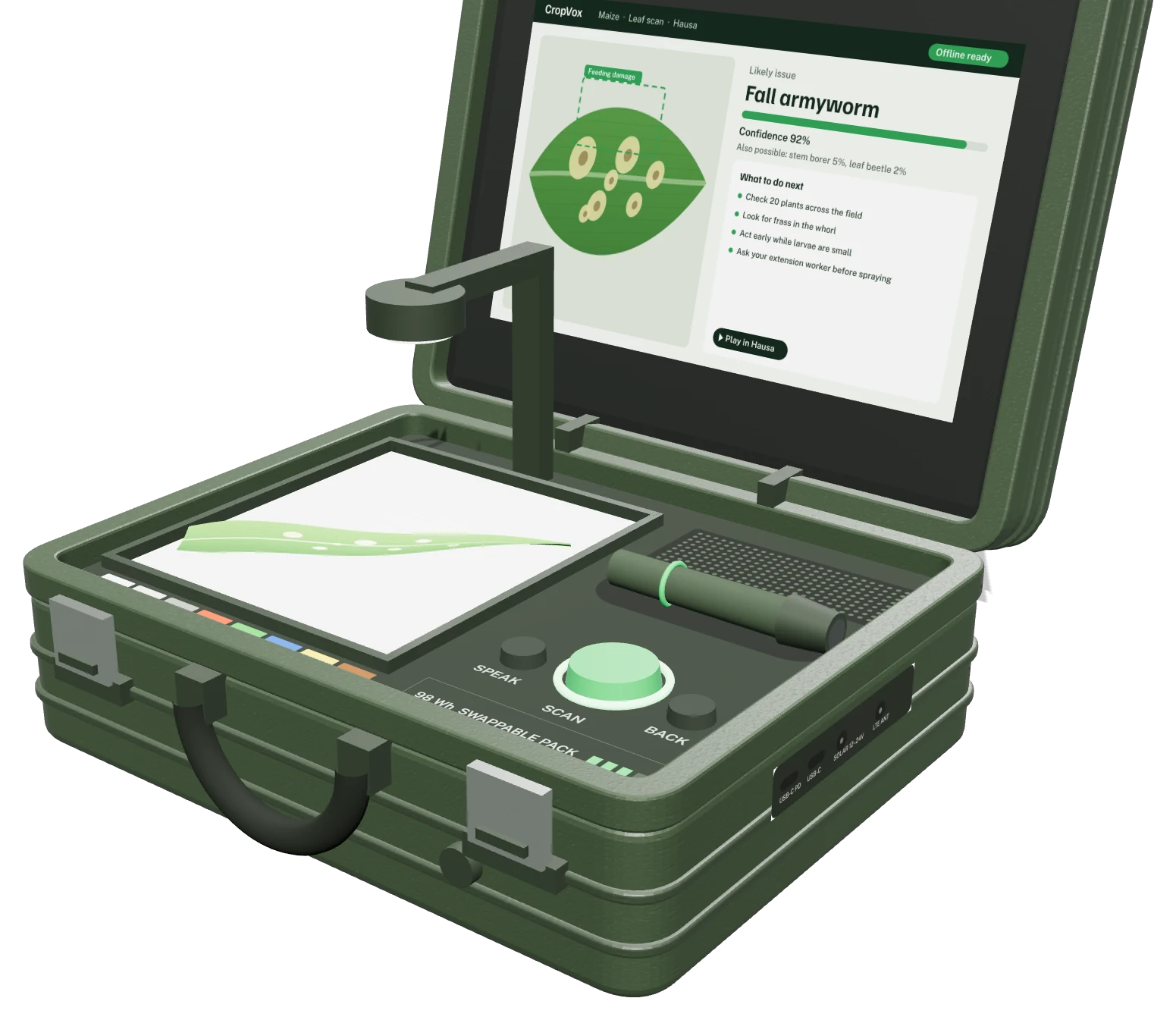
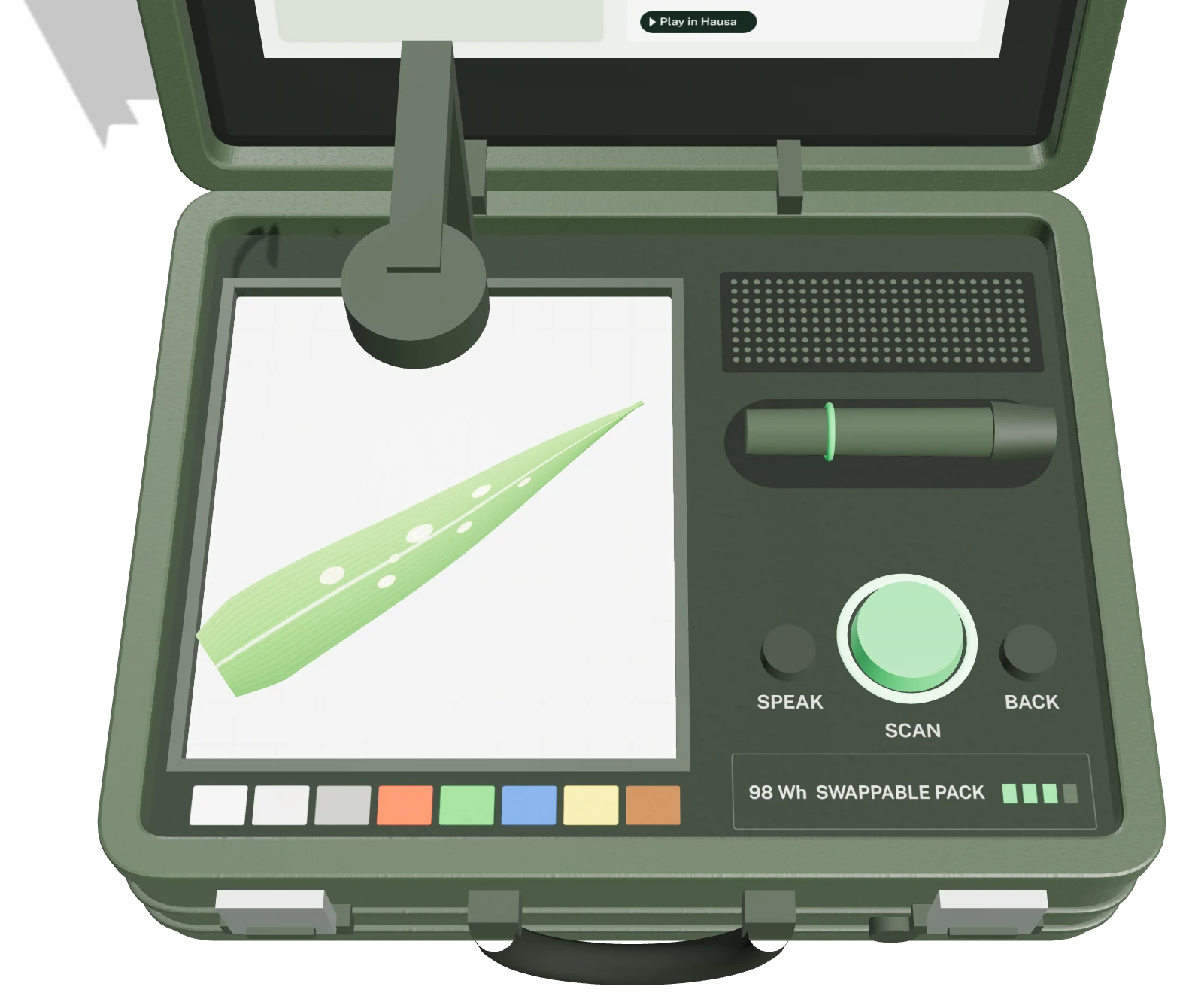
15.6 inch display in the lid. Readable in direct sun and usable with gloves or wet fingers.
A fixed camera above the tray with its own diffused light, so every leaf is photographed the same way at noon or at dusk.
Lay a leaf flat on the backlit tray. The colour strip along its edge lets the model correct for lighting before it reads symptoms.
A second camera on a 3 metre coiled cable for standing plants, stems, pods and leaves too big for the tray.
One large button that works through gloves and mud. Speak and Back sit either side of it.
Sized for a full field day and kept under the 100 Wh airline limit so the station can fly as cabin luggage.
USB-C charging, a 12 to 24 V solar input and an optional LTE antenna behind a rubber flap.
Try a scan
Pick a leaf, set the light and focus, then press Scan. Push a slider too far and the station refuses the photo instead of guessing.
- Image checkSharpness and light
- Crop and damageFind the plant and the problem area
- Rank problemsCompare against the crop catalogue
- GuidancePick curated next steps
Results are a demonstration with sample data. The real station runs its models on the device.
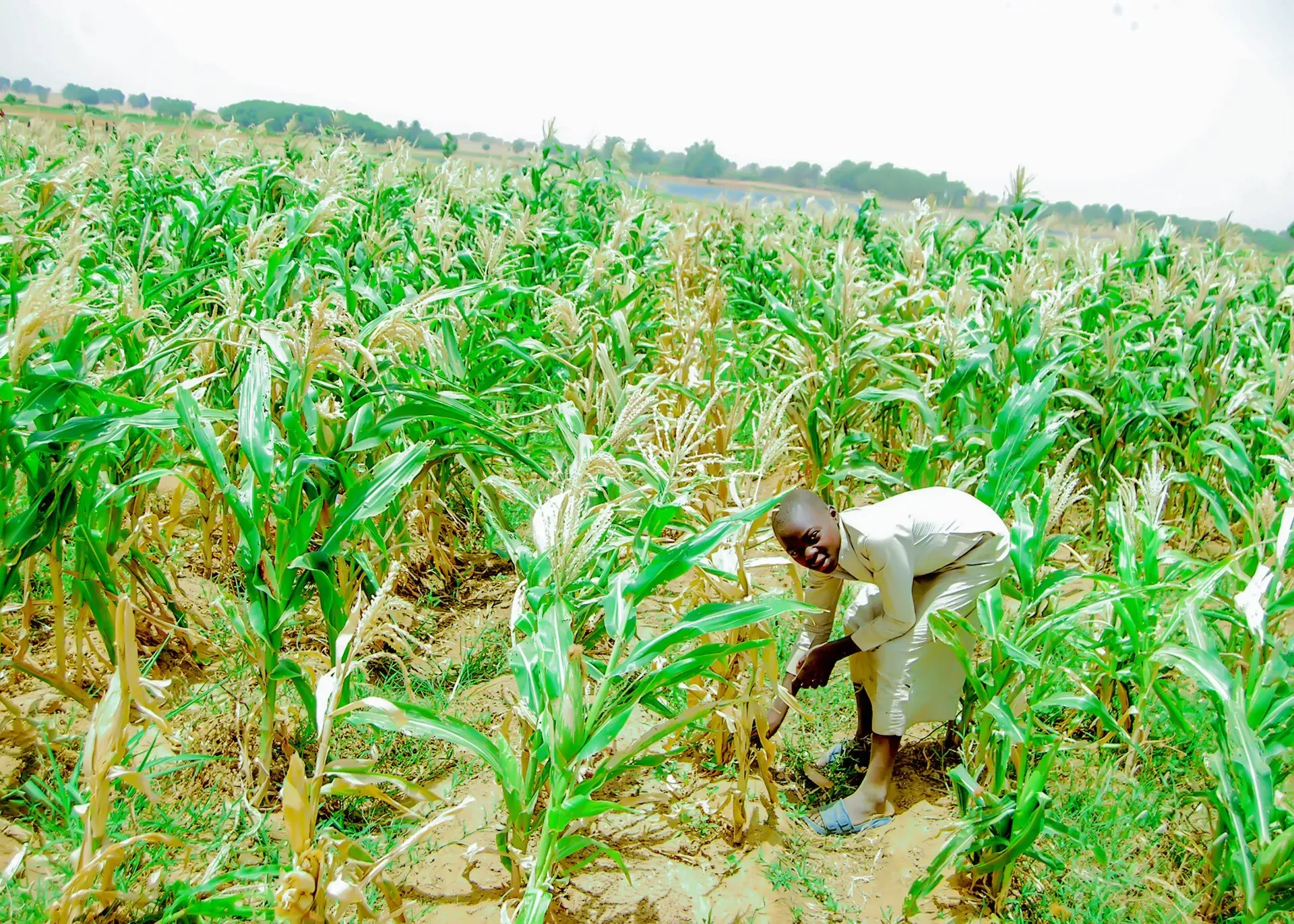 Photo: Salihu Aliyu, CC BY-SA 4.0
No network? Keep scanning.
Crop problems are found far from good coverage. The model, the guidance library and the voices are stored on the station, so the farmer gets an answer in the field, not after a trip to town.
One station serves a whole network of farms
The case moves between farms with an extension worker, or stays at a cooperative where farmers bring leaves to it.
The same inspection on every farm
An extension worker carries the station on their round. Every scan is logged with crop, result and date, so the agency sees what is spreading and where.
A crop desk at the collection point
Members bring a leaf on market day. The cooperative shares one station across hundreds of farmers and spots outbreaks before they reach every field.
Advice before the sale
An agro-dealer scans the farmer's leaf before recommending a product, so the treatment matches the problem and money is not spent on the wrong input.
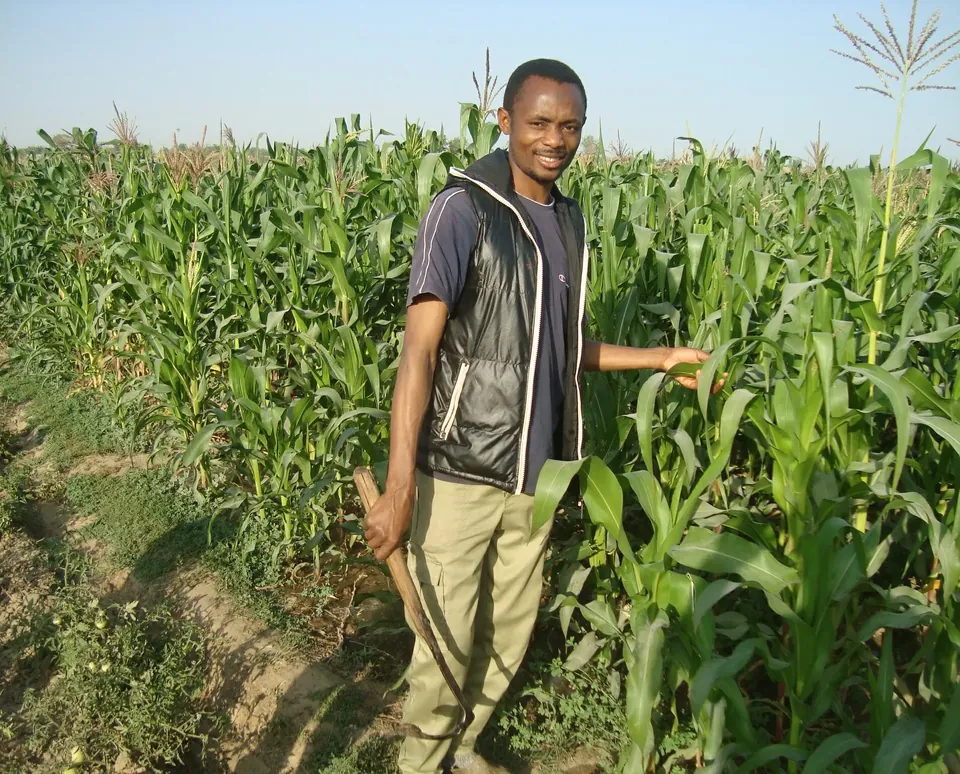
It reports likelihood, not certainty
Every result comes with a confidence level and the next most likely options. When the station is unsure, it says so and asks for a better image or an expert, instead of guessing.
Put a field station in your next growing season
The first FS-1 units go out for the 2027 growing season. We are looking for extension programmes, cooperatives and research partners to run them.