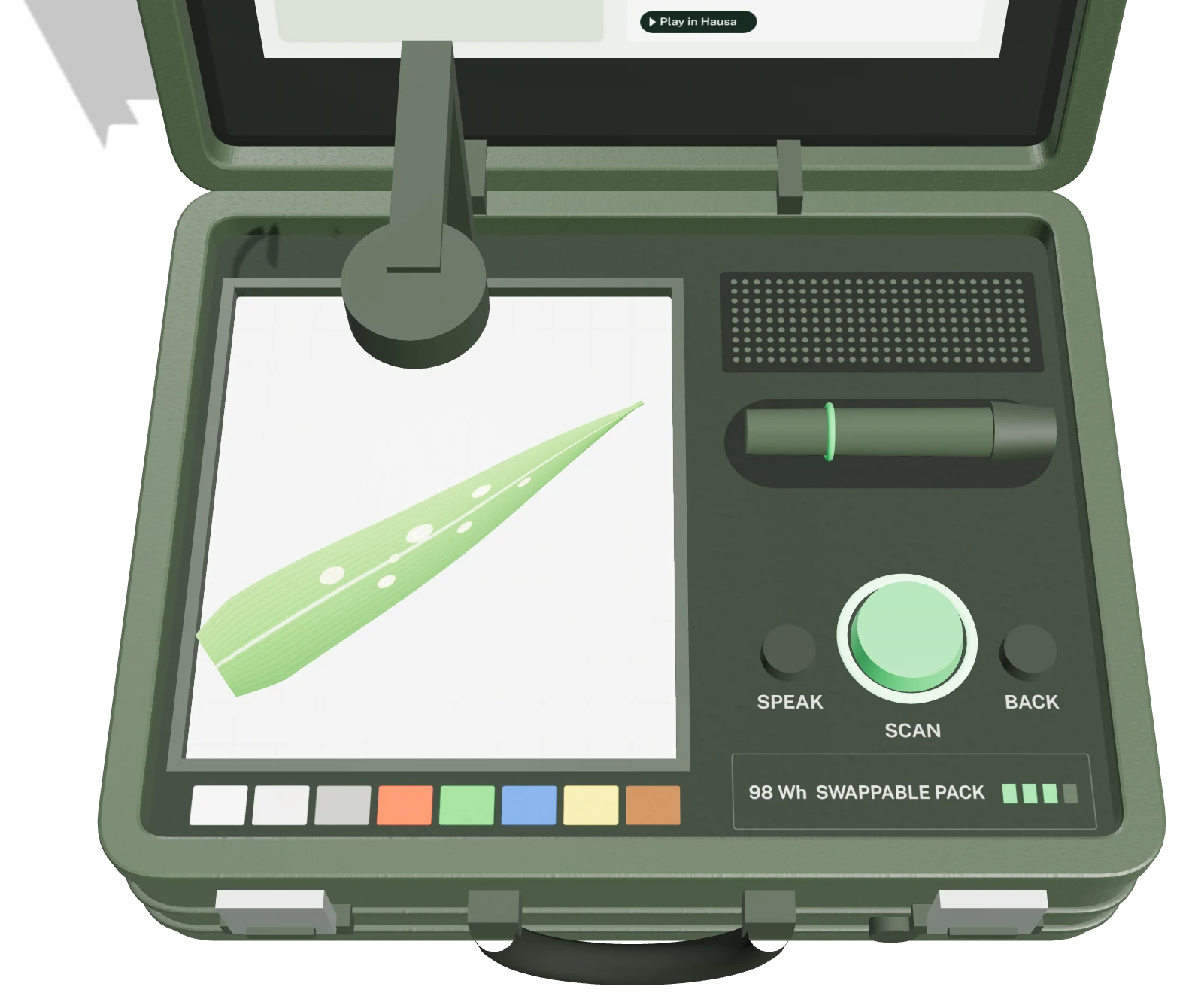
The tray, for picked leaves
Lay the leaf flat, close the camera arm over it and press Scan. Even light and a colour strip in every frame make tray scans the most accurate option.
 CropVox
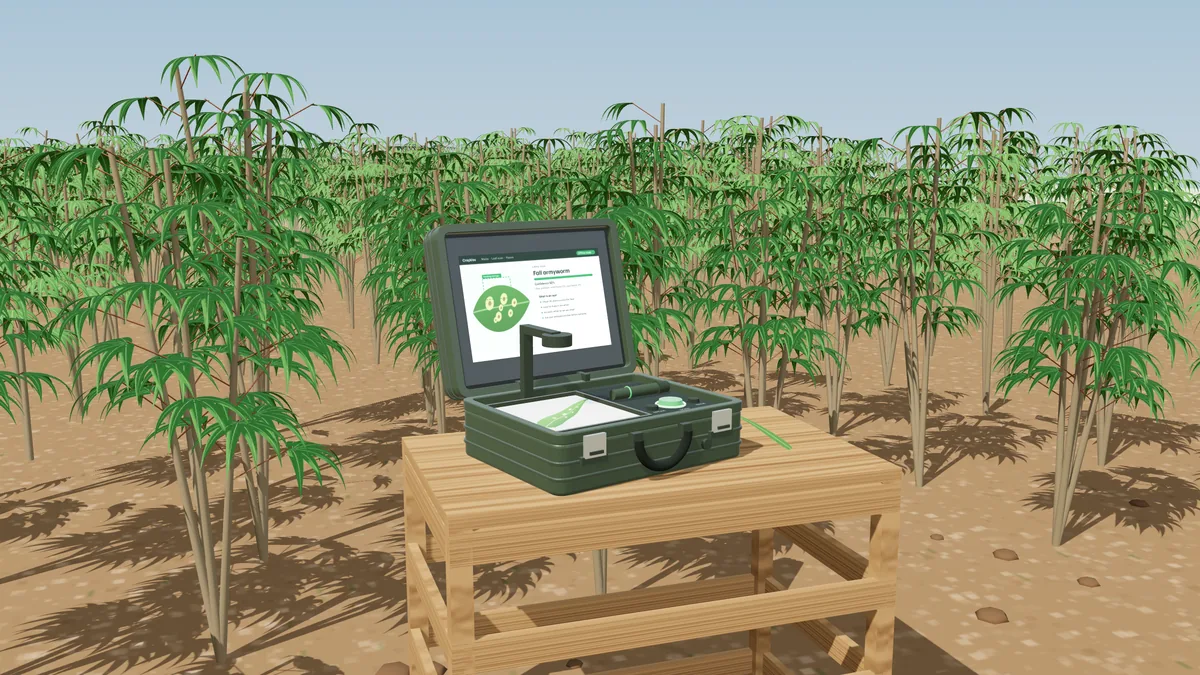
 Field stationThe FS-1 case, its cameras, controls and power
 Offline AIWhat runs on the station and what waits for signalCrop coverageTen launch crops and what each catalogue covers
 TechnologyThe vision pipeline, edge models and confidence
 Run a pilot seasonPut a field station with your extension team or cooperative.
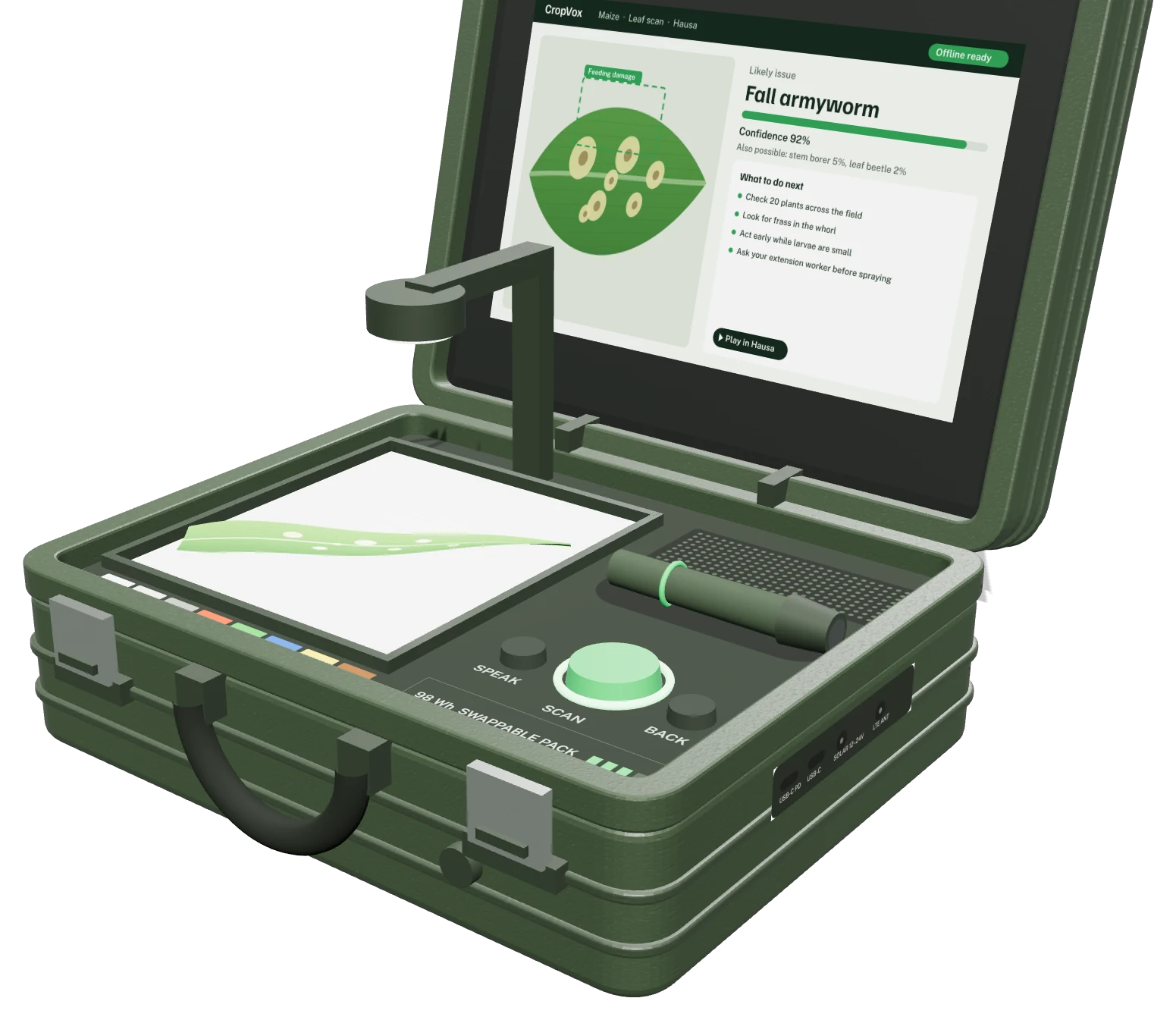
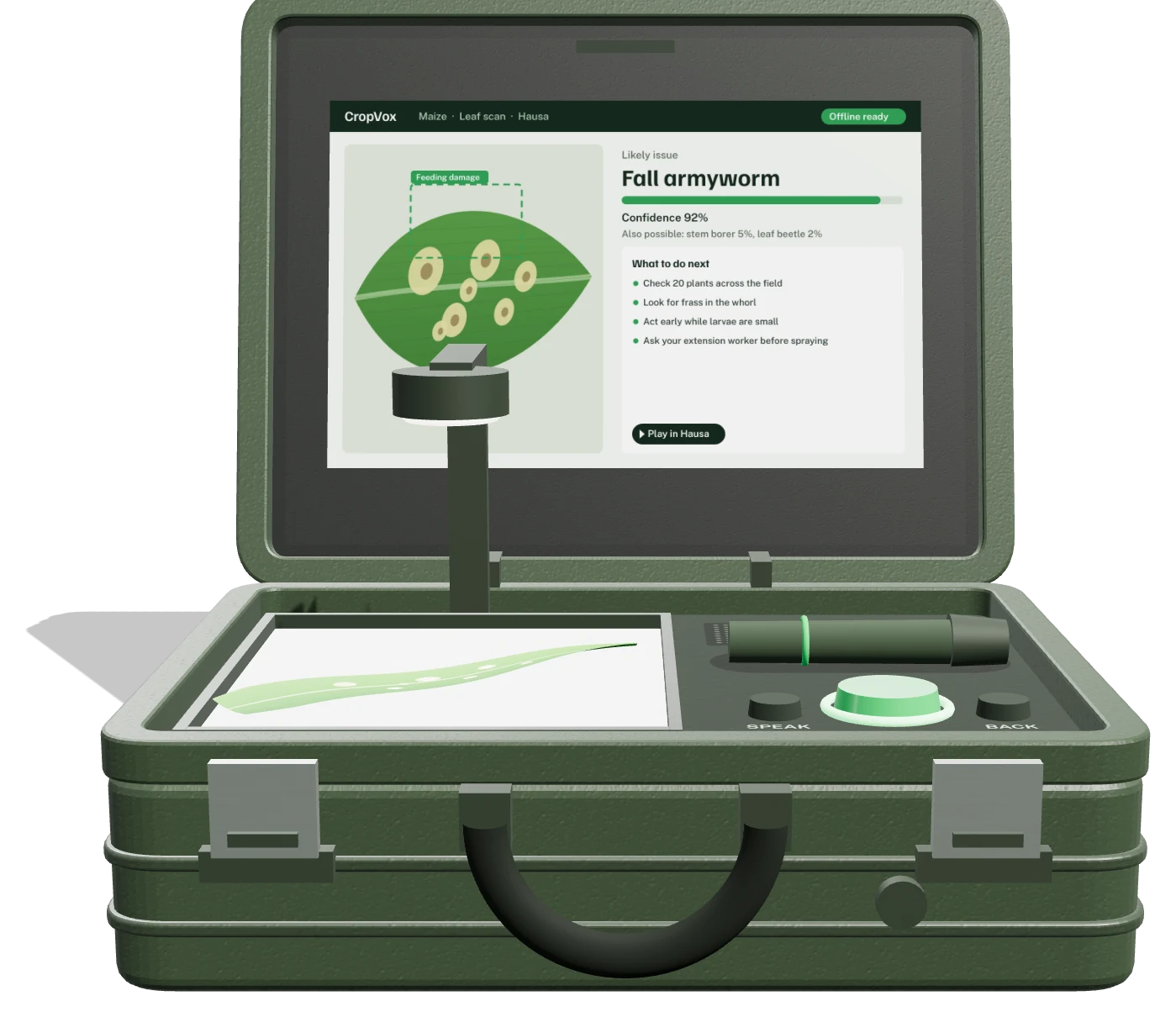
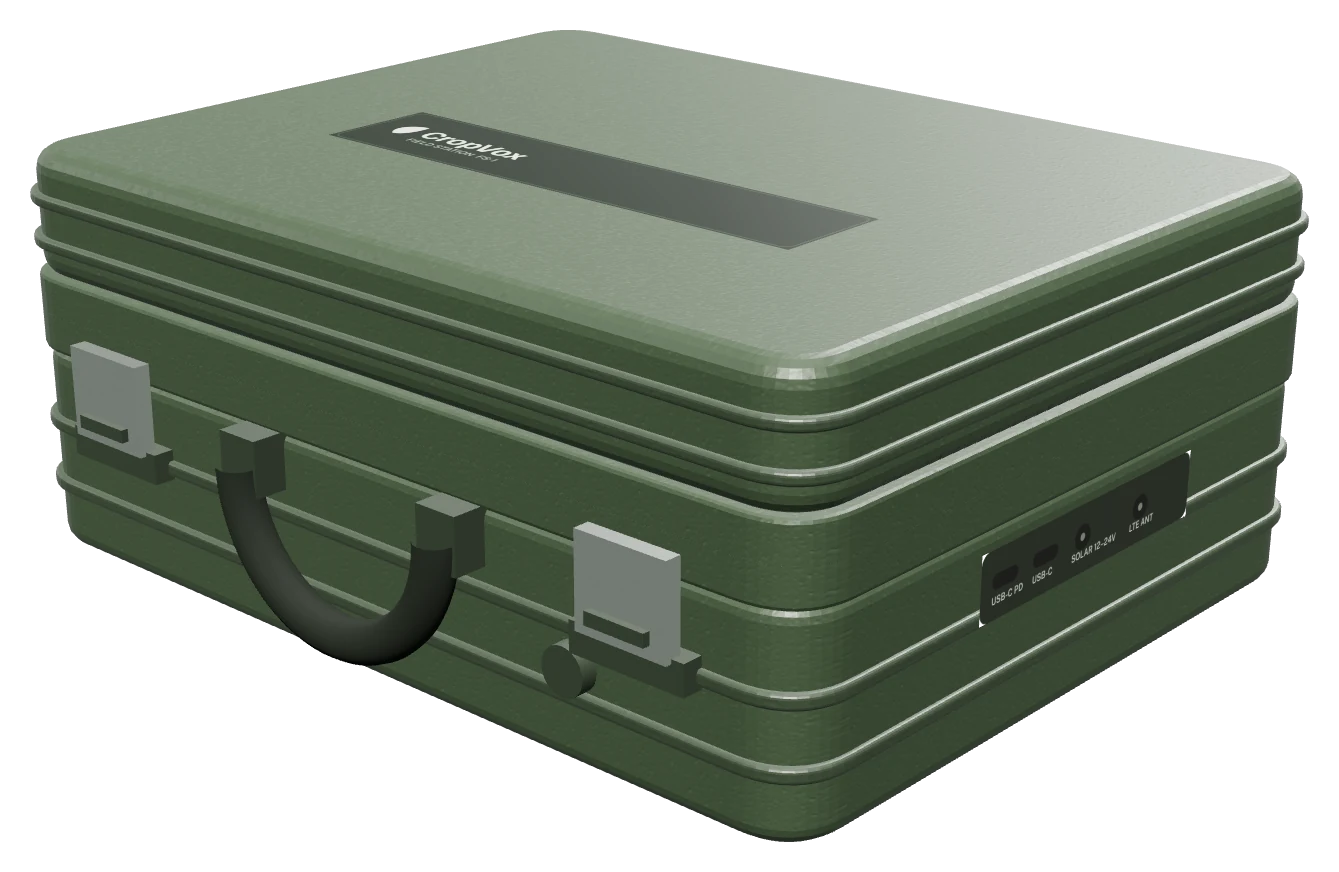
The FS-1 puts controlled imaging, a sunlight-readable screen, embedded AI and spoken guidance inside a sealed hard case. Open the lid and it is ready to scan.
Drag to turn the station
Interactive concept model of the FS-1 prototype.
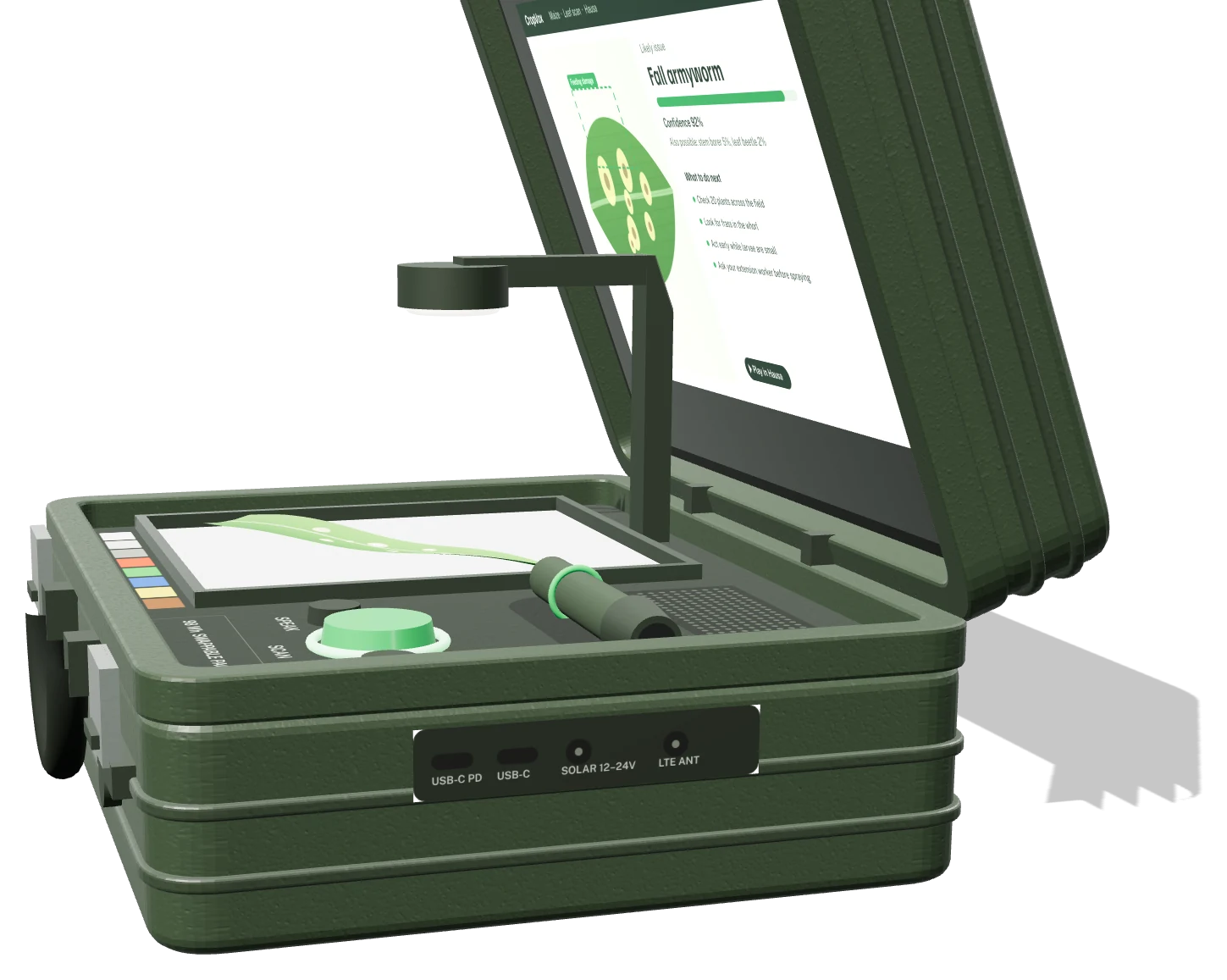
The control deck is laid out for repeat use by people who are standing in a field, often with dirty hands. Tap a number for detail.
A fixed camera above the tray with its own diffused light, so every leaf is photographed the same way at noon or at dusk.
Lay a leaf flat on the backlit tray. The colour strip along its edge lets the model correct for lighting before it reads symptoms.
A second camera on a 3 metre coiled cable for standing plants, stems, pods and leaves too big for the tray.
One large button that works through gloves and mud. Speak and Back sit either side of it.
Sized for a full field day and kept under the 100 Wh airline limit so the station can fly as cabin luggage.
USB-C charging, a 12 to 24 V solar input and an optional LTE antenna behind a rubber flap.
A handheld phone photo changes with every angle and every cloud. The station gives the model consistent images, which is what makes its results dependable.
Lay the leaf flat, close the camera arm over it and press Scan. Even light and a colour strip in every frame make tray scans the most accurate option.
Lift the wand out of its slot to reach stems, pods, whorls and large leaves on the plant. A grip ring lights green when the image is steady enough.
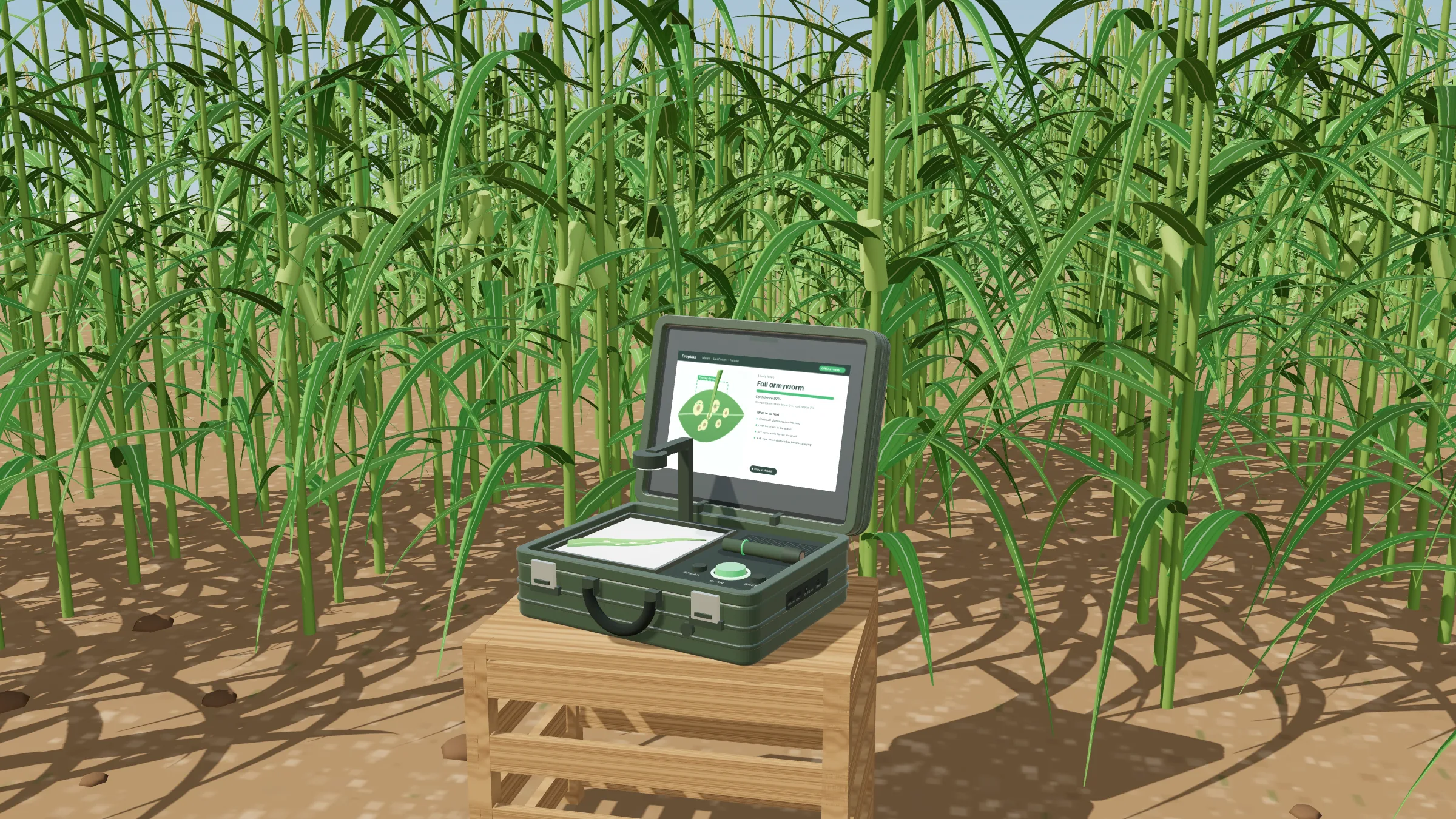
The 98 Wh pack covers a working day of scanning. Carry a spare, charge from a vehicle over USB-C, or leave the solar panel on the crate while you walk the rows.
These are design targets for the FS-1 prototype. Figures will change as field testing progresses.
Concept renders of the FS-1. Drag, swipe or use the arrow keys.
Pilot units go to partners who can run structured field trials and share feedback.