 CropVox
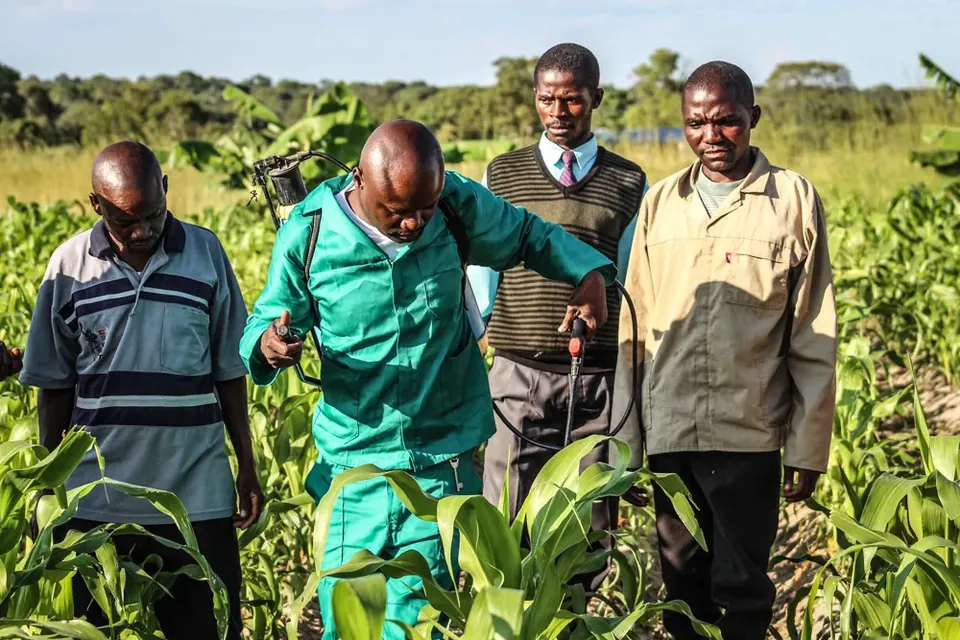
A day with the field station
An example round for an extension worker covering farms a few kilometres apart, with patchy coverage most of the day.
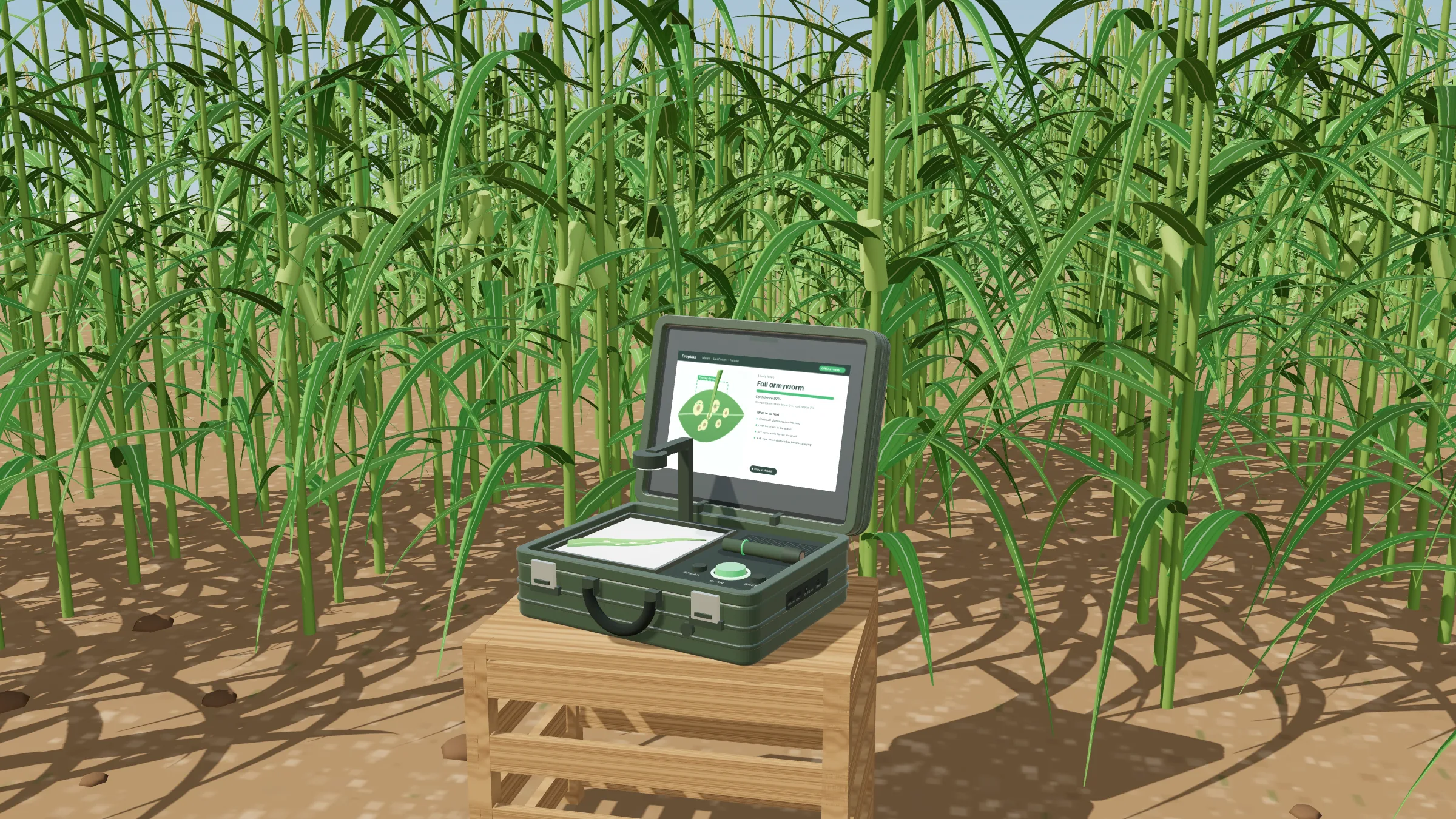
Leave with a charged station
The station charged overnight at the office and synced the latest guidance while it was there.
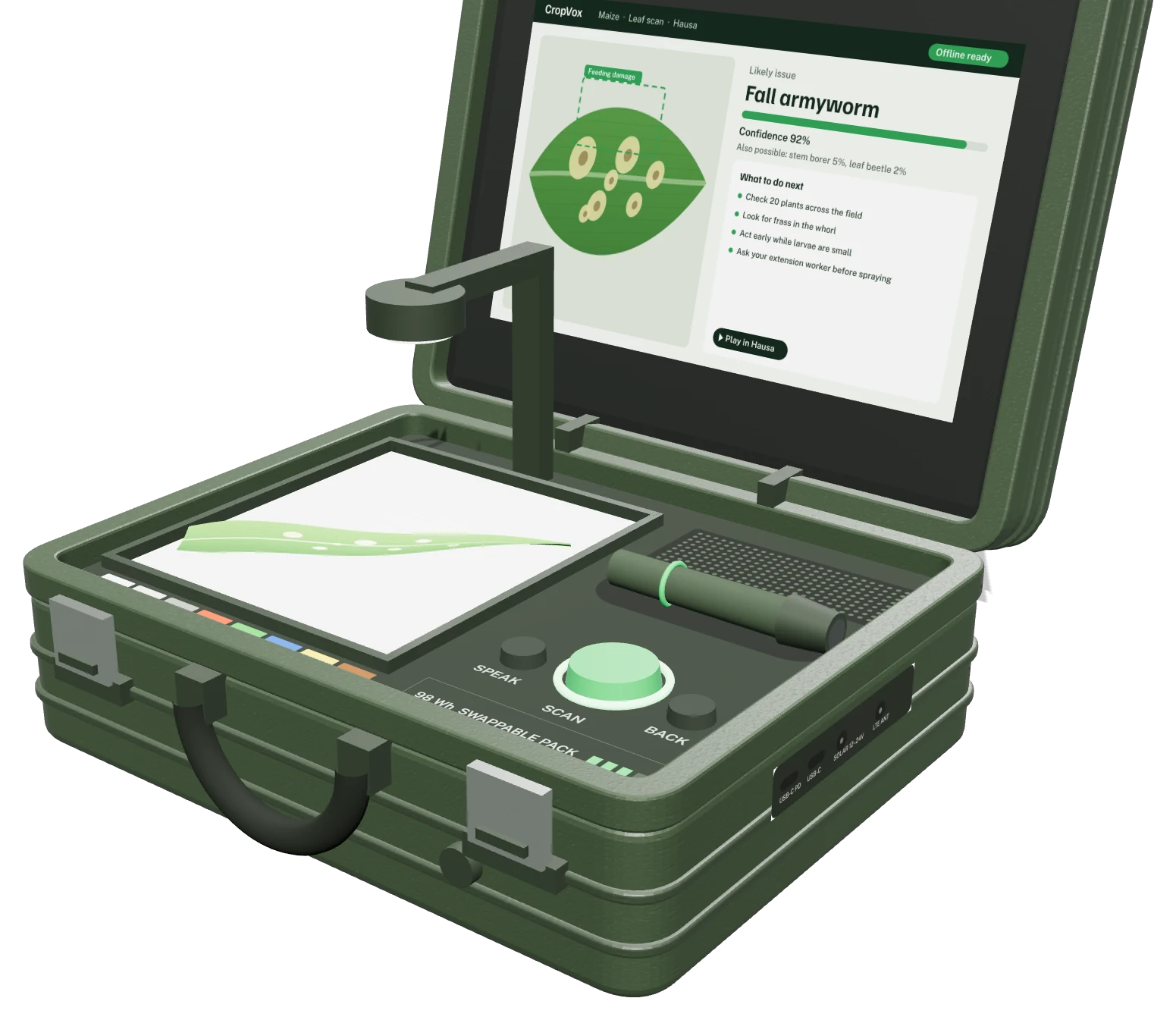
Open the case at the first farm
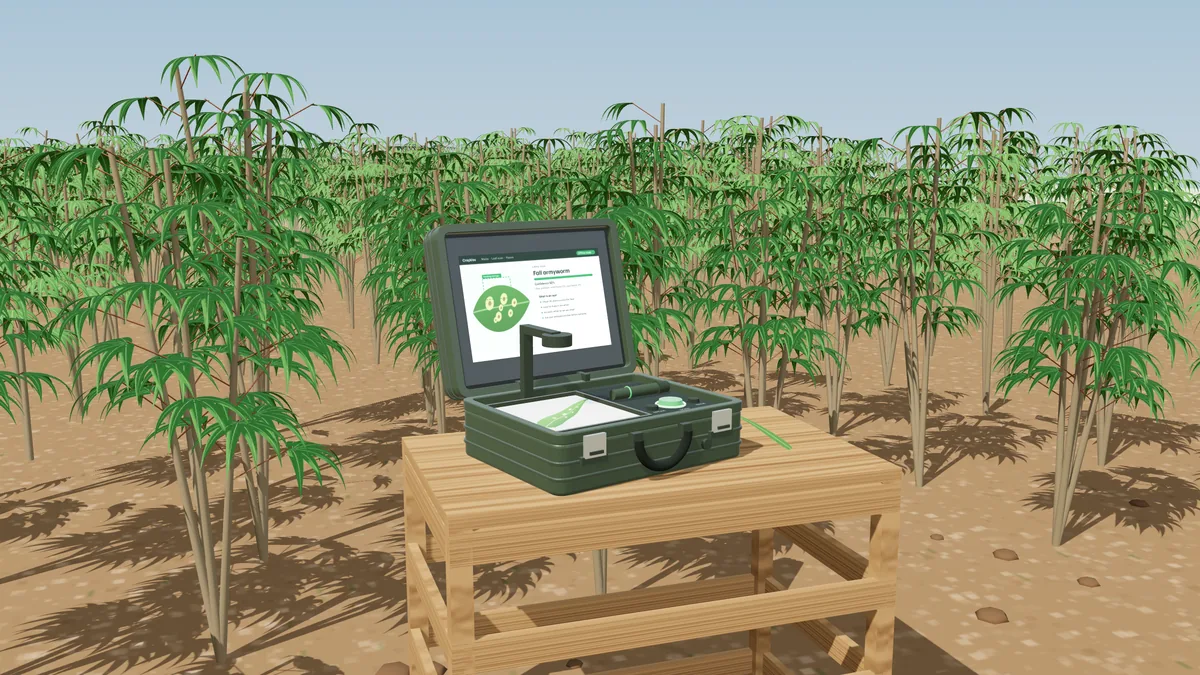
Set it on a crate or the bike carrier, open the lid and it is ready in under a minute.
Scan leaves the farmer brings
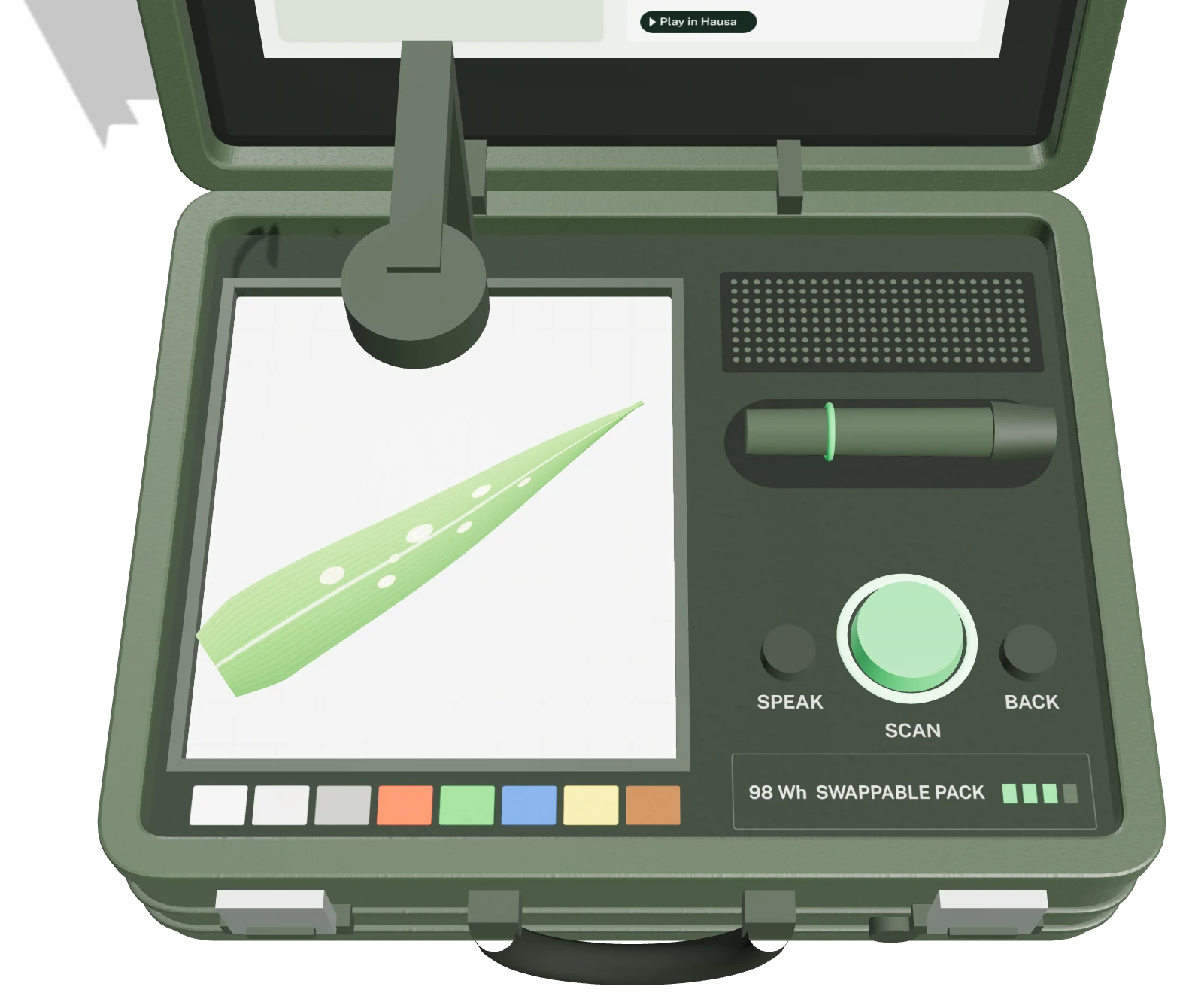
Lay each leaf in the tray, or walk to the plant with the wand. Each scan takes a few seconds.
Listen to the guidance together
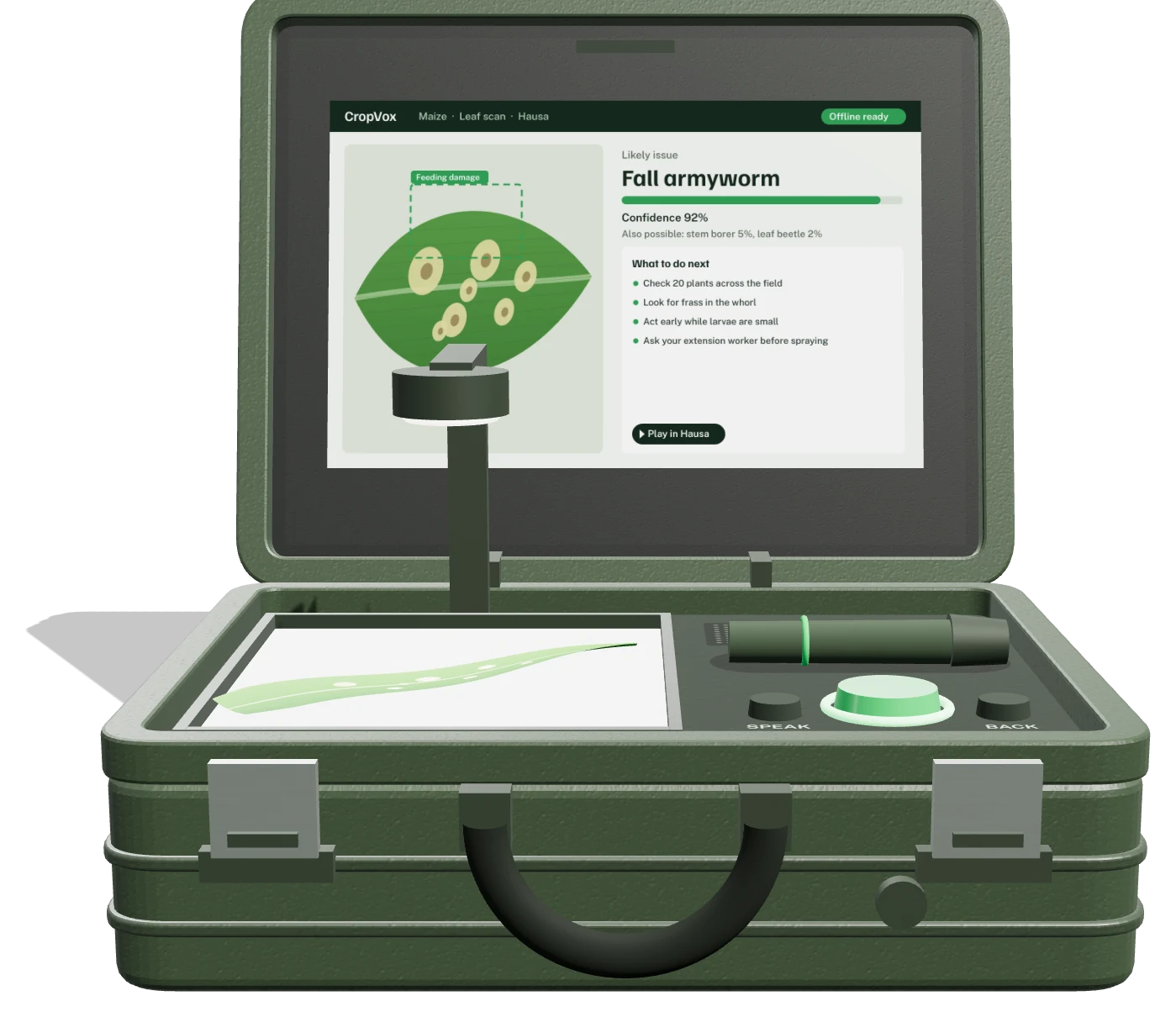
The station reads the result and next steps aloud in the farmer's language. The farmer can replay it or ask to hear the alternatives.
Records build up offline
Every scan is saved with crop, result, confidence and location. Unclear cases are flagged for review.
Sync when back in coverage
At the office or any point with signal, records upload and the unclear cases go to an expert. Answers come back on the next sync.
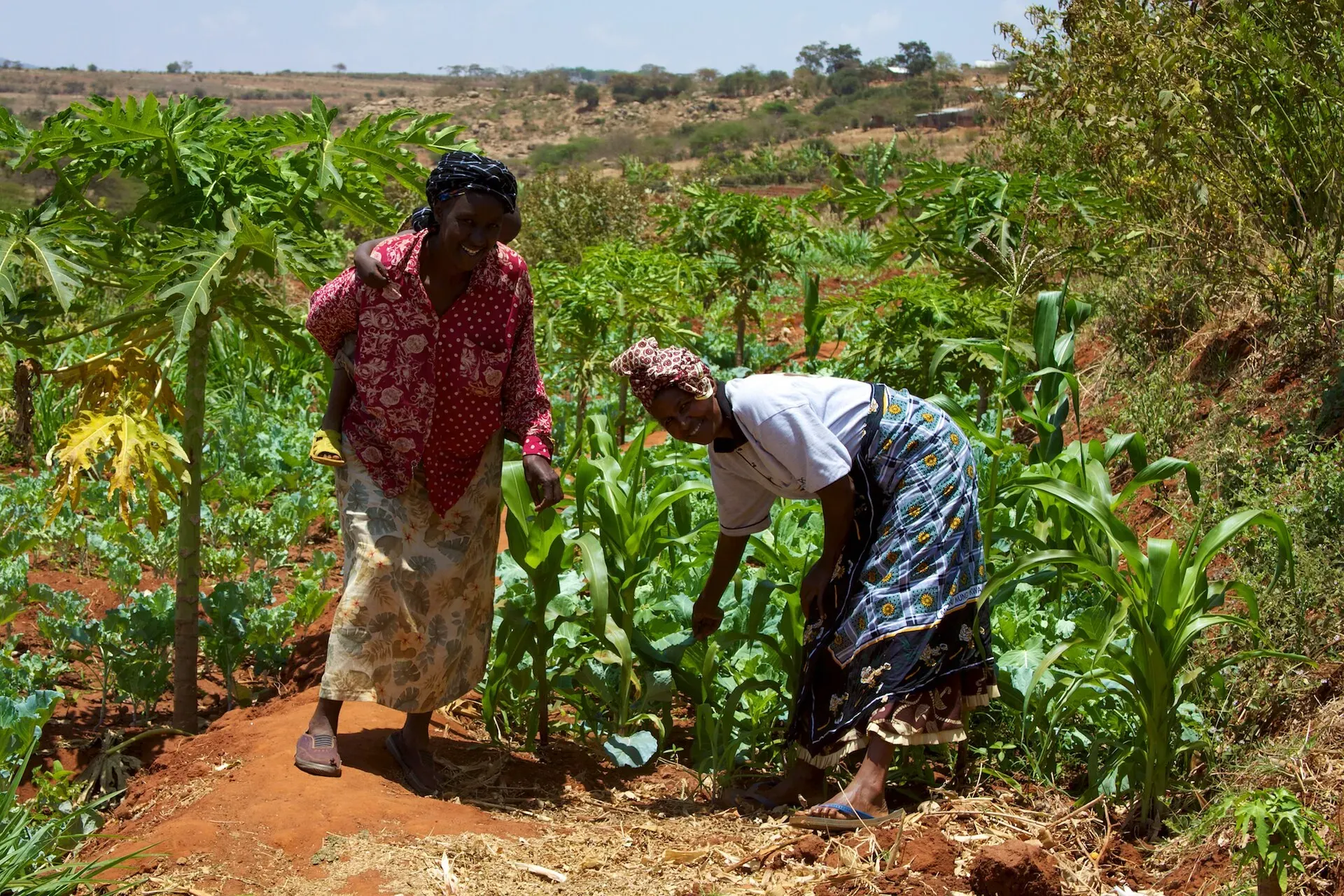 Photo: McKay Savage, CC BY 2.0
At a cooperative, the station stays put
On market days the case sits open on a table near the collection point. Farmers bring leaves in a bag, and the cooperative sees what is spreading among its members week by week.